باقسيان (تركيا)
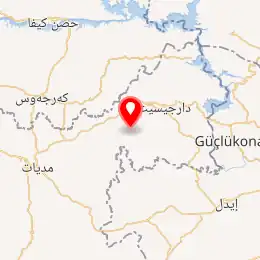
| البلد | |
|---|---|
| تقع في التقسيم الإداري | |
| المنطقة الزمنية | |
| الإحداثيات | |
| يشترك في الحدود مع | |
| الرمز البريدي |
47800 47500  |
باقسيان (العربية: باقسيان؛[3] السريانية: ܒܝܬ ܩܣܝܢܐ;[3] التركية: Alagöz; Bethkustan) [ا] هو حي من أحياء بلدية ومنطقة ميديات، في محافظة ماردين في تركيا.[7] يسكنه السريان الذين ينتمون إلى الكنيسة السريانية الأرثوذكسية ويتحدثون لهجتهم الخاصة من اللهجة الطورية، وهي لغة آرامية جديدة مركزية. [8] [ب] بلغ عدد سكان القرية 154 نسمة في عام 2022. تقع في منطقة طور عابدين التاريخية. [15]
وفي القرية كنائس مار ديمت ومور إيليو.[16][12] وهناك أيضًا كنائس مهدمة لمور شمعون ومور برصومو.[17] تشتهر القرية بصناعة النبيذ.[11]
التركيبة السكانية
العائلات
وفيما يلي قائمة بعدد العائلات السريانية التي سكنت باقسيام حسب السنة المذكورة. ما لم يُذكر خلاف ذلك، فإن جميع الأرقام مأخوذة من القائمة الواردة في كتاب المسيحية الشرقية، والتأمل اللاهوتي في الدين والثقافة والسياسة في الأرض المقدسة، واللقاء المسيحي مع الإسلام والعالم الإسلامي، كما هو موضح في المراجع أدناه.[18] [ج]
سكان
| عدد السكان تاريخاً | ||
|---|---|---|
| السنة | العدد | %± التغير |
| 1985 | 279 | — |
| 1990 | 150 | −46.2% |
| 1997 | 94 | −37.3% |
| 2007 | 115 | +22.3% |
| 2012 | 145 | +26.1% |
| 2013 | 144 | −0.7% |
| 2014 | 145 | +0.7% |
| 2015 | 150 | +3.4% |
| 2016 | 153 | +2% |
| 2017 | 164 | +7.2% |
| 2018 | 174 | +6.1% |
| 2019 | 167 | −4% |
| 2020 | 162 | −3% |
| 2021 | 153 | −5.6% |
| 2022 | 154 | +0.7% |
| 2023 | 159 | +3.2% |
| 2024 | 153 | −3.8% |
شخصيات بارزة
- جبرائيل باقسيان (573/ 574–648)، أسقف طور عابدين للسريان الأرثوذكس.
- تيموثاوس صموئيل أكتاش (توفي. 1945 م)، رئيس أساقفة طور عابدين للسريان الأرثوذكس.[23]
مراجع
ملحوظات
- ↑ تُكتب في المصادر الغربية بعدة صِيَغ: Bagassian, Bagssian, Bakisyan, Bakısyan, Baqesyān, Baqisyan, Baqsyan, Bekusyone, Bekusyono, Bequsyone, Bēt Qusṭan, Bēth Qusṭān, Beth Qusyan, Bōqısyōno, or Boqusyono.[4] Also known simply as Kustan or Qustan.[5] Nisba: Qusnōyo.[6]
- ↑ For the use of the term "Syriac" to refer to the population of Beth Kustan.[9] For use of the term "Assyrian".[10][11][12][13] The terms "Syriac" and "Assyrian" are used to refer to the same group of people.[14]
- ↑ يتراوح حجم الأسرة الواحدة ما بين خمسة إلى عشرة أفراد.[19]
الاستشهادات
- ↑ وصلة مرجع: https://web.archive.org/web/20240224154238/https://www.resmigazete.gov.tr/eskiler/2016/09/20160908-2.pdf.
- ↑ وصلة مرجع: https://support.microsoft.com/tr-tr/topic/t%C3%BCrkiye-de-dst-uygulamas%C4%B1-sona-ermi%C5%9Ftir-56f14484-a323-543c-5e36-f701723f5b22.
- 1 2 Carlson، Thomas A. (9 ديسمبر 2016). "Beth Qustan - ܒܝܬ ܩܣܝܢܐ". The Syriac Gazetteer. مؤرشف من الأصل في 2025-02-23. اطلع عليه بتاريخ 2020-04-25.
- ↑
Barsoum 2003, p. 559
- Jongerden & Verheij 2012, p. 321
- Courtois 2013, pp. 7, 15
- Gaunt 2006, p. 149
- Palmer 1990, p. 211
- Ritter 1967, p. xx
- Bcheiry 2009, p. 12
- Lahdo 2014, p. 51
- Takahashi 2011, p. 81.
- ↑
Gaunt 2006, p. 211
- Barsoum 2008, p. 7.
- ↑ Ritter (1967), p. 12.
- ↑ "Türkiye Mülki İdare Bölümleri Envanteri". T.C. İçişleri Bakanlığı (بالتركية). Archived from the original on 2025-02-01. Retrieved 2022-12-19.
- ↑ Brock 2021
- ↑
Lahdo 2014, p. 81
- Gaunt 2006, p. 211.
- ↑ اكتب عنوان المرجع بين علامتي الفتح
<ref>والإغلاق</ref>للمرجعSofuoglu - 1 2 "Message in a bottle: How a winemaker is reviving Assyrian culture in Turkey". يورونيوز (بالإنجليزية). 4 Nov 2021. Archived from the original on 2024-09-08. Retrieved 2025-03-29.
- 1 2 3 Mehmed Salih Bedirxan (4 مارس 2021). "A life in service of Assyrian culture". Inside Turkey. مؤرشف من الأصل في 2025-04-20. اطلع عليه بتاريخ 2022-08-12.
- ↑ اكتب عنوان المرجع بين علامتي الفتح
<ref>والإغلاق</ref>للمرجعBianet - ↑ Omtzigt, Tozman & Tyndall (2012), p. i: "In this book the authors of the different chapters made their own choice regarding the use of the names Suryoye, Syriacs, Syrians, Assyrians, Arameans, Syrian Orthodox, Syriac Orthodox, Syrian Catholics, Syrian Protestants, Chaldean and others. The different names should be read against the background of changes in the context of living, different ideas about the historical past of the same group of people and in the context of different opinions regarding the best name to be used."
- ↑ Barsoum 2003.
- ↑ Takahashi (2011).
- ↑ Keser-Kayaalp (2022).
- ↑ Brock (2021).
- ↑ Brock (2021), p. 167.
- ↑ Courtois (2004), p. 226.
- ↑ Courtois (2013), p. 149.
- ↑ Oez (2018), p. 341.
- ↑ "Mor Timotheos Samuel Aktas". Malankara Syriac Christian Resources. مؤرشف من الأصل في 2024-11-27. اطلع عليه بتاريخ 2024-10-22.
فهرس
- Barsoum، Aphrem (2003). The Scattered Pearls: A History of Syriac Literature and Sciences. ترجمة: Matti Moosa (ط. 2nd). Gorgias Press. اطلع عليه بتاريخ 2020-07-14.
- Barsoum، Aphrem (2008). The History of Tur Abdin. ترجمة: Matti Moosa. Gorgias Press. اطلع عليه بتاريخ 2021-04-01.
- Bcheiry، Iskandar (2009). The Syriac Orthodox Patriarchal Register of Dues of 1870: An Unpublished Historical Document from the Late Ottoman Period. Gorgias Press. اطلع عليه بتاريخ 2025-03-21.
- Brock، Sebastian (2021). "The Syrian Orthodox Church in the twentieth century". Eastern Christianity, Theological Reflection on Religion, Culture, and Politics in the Holy Land and Christian Encounter with Islam and the Muslim World (PDF). Living Stones of the Holy Land Trust. ص. 155–181. مؤرشف من الأصل (PDF) في 2025-03-31. اطلع عليه بتاريخ 2022-08-12.
- Courtois، Sébastien de (2004). The Forgotten Genocide: Eastern Christians, The Last Arameans. ترجمة: Vincent Aurora. Gorgias Press. اطلع عليه بتاريخ 2024-11-20.
- Courtois, Sébastien de (2013). "Tur Abdin : Réflexions sur l'état présent descommunautés syriaques du Sud-Est de la Turquie,mémoire, exils, retours". Cahier du Gremmamo (بالفرنسية). 21: 113–150. Archived from the original on 2024-12-01.
- Gaunt، David (2006). Massacres, Resistance, Protectors: Muslim-Christian Relations in Eastern Anatolia during World War I. Gorgias Press. اطلع عليه بتاريخ 2023-05-21.
- Jongerden، Joost؛ Verheij، Jelle، المحررون (2012). Social Relations in Ottoman Diyarbekir, 1870-1915. Brill. اطلع عليه بتاريخ 2024-11-20.
- Keser-Kayaalp، Elif، المحرر (يناير 2022). Syriac Architectural Heritage at Risk in TurʿAbdin (PDF). مؤرشف من الأصل (PDF) في 2025-03-06. اطلع عليه بتاريخ 2024-11-08.
- Lahdo, Ablahad (2014). "Bequsyone Texts Reflecting Cultural Aspects in Tur Abdin". In Tal Davidovich; Ablahad Lahdo; Torkel Lindquist (eds.). From Tur Abdin to Hadramawt: Semitic Studies. Festschrift in Honour of Bo Isaksson on the Occasion of His Retirement (بالإنجليزية). هاراسوفينز فيرلاج . pp. 81–91. Archived from the original on 2025-01-14. Retrieved 2025-03-30.
{{استشهاد بكتاب}}: صيانة الاستشهاد: علامات ترقيم زائدة (link) - Oez، Mikael (2018). "A Guide to the Documentation of the Beth Qustan Dialect of the Central Neo-Aramaic Language Turoyo". Language Documentation & Conservation. ج. 12: 339–358. مؤرشف من الأصل في 2025-03-29.
- Omtzigt، Pieter؛ Tozman، Markus K.؛ Tyndall، Andrea، المحررون (2012). The Slow Disappearance of the Syriacs from Turkey and of the Grounds of the Mor Gabriel Monastery (PDF). LIT Verlag Münster. مؤرشف من الأصل (PDF) في 2024-05-16. اطلع عليه بتاريخ 2024-10-17.
- Palmer، Andrew (1990). Monk and Mason on the Tigris Frontier: The Early History of Tur Abdin. Cambridge University Press. اطلع عليه بتاريخ 2020-07-15.
- Ritter, Hellmut (1967). Turoyo: Die Volkssprache der Syrischen Christen des Tur 'Abdin (بالألمانية). Franz Steiner Verlag. Vol. 1.
- Takahashi، Hidemi (2011). "Also via Istanbul to New Haven- Mss. Yale Syriac 7-12". في Felicitas Opwis؛ David Reisman (المحررون). Islamic Philosophy, Science, Culture, and Religion: Studies in Honour of Dimitri Gutas (PDF). Brill. ص. 157–179. مؤرشف من الأصل (PDF) في 2024-01-10. اطلع عليه بتاريخ 2025-03-29.